

Peterbilt Front Bumper Guide: Fitment and Materials
A Peterbilt front bumper isn't a one-size-fits-all part: it must match the truck's exact model, year, and configuration to bolt on correctly. Peterbilt's body-builder manual lists bumper-to-frame distances of 11.4 inches for one configuration and 13.8 inches for another, showing why measurements matter as much as the badge on the hood.
Maybe you've found a bumper advertised for your Peterbilt, but you're not sure whether its mounts, cutouts, or depth match your truck. A mismatch can mean a stalled installation, return freight, and lost time on the road. Before you buy, verify the truck's configuration, inspect the mounting points, and choose a material that suits the routes you run.
Table of Contents
- Why Your Peterbilt Front Bumper Must Match Your Truck
- How Peterbilt Model History Affects Bumper Fitment
- Key Fitment Checks Before You Order
- Chrome vs Stainless Steel Bumper Materials
- Popular Peterbilt Bumper Styles and Finishes
- Installation Guidance and Common Pitfalls
- What Bumper Rules Actually Apply to Heavy Trucks
- Getting the Right Peterbilt Front Bumper the First Time
Why Your Peterbilt Front Bumper Must Match Your Truck
A bumper arrives at the shop, the old one comes off, and the new mounting holes don't line up. Or the holes align, but the bumper sits too far forward and crowds the hood or grille. A listing that says “fits Peterbilt” doesn't answer the questions that decide whether the part will bolt on: which model and year, which frame setup, which hood, and which bumper configuration?
That's why a Peterbilt front bumper should be selected by the truck's complete setup, not by brand alone. A 379, 389, 579, or 589 can have different front-end geometry and mounting details. The same model can also have variations tied to axle position, prior repairs, or custom equipment.
Practical rule: If the seller can't confirm the mounting pattern and cutouts for your configuration, don't assume the bumper is a direct fit.
Fitment mistakes cost more than the part itself. A truck sitting in a bay while someone modifies brackets loses working time, and shipping a heavy bumper back adds another delay. A forced fit can also damage the finish or create clearance problems around the hood, lamps, or tow points.
Before ordering, gather the VIN, model year, cab and hood style, original part number, clear photos of the front end, and key measurements. Then check the frame rails, mounts, and hardware for damage or previous changes. Those details help you choose a replacement that suits the truck's work and appearance, whether you're after a polished highway look or a tougher setup for severe service.
How Peterbilt Model History Affects Bumper Fitment
Peterbilt's history is a reminder that familiar styling doesn't guarantee interchangeable parts. The company was founded in California in 1939, PACCAR acquired it in 1958, and Peterbilt opened its Denton, Texas, plant in 1980. The plant completed its 300,000th truck by December 2008 and reached 750,000 trucks in 2023, milestones recorded in Peterbilt's history of purposeful innovation.
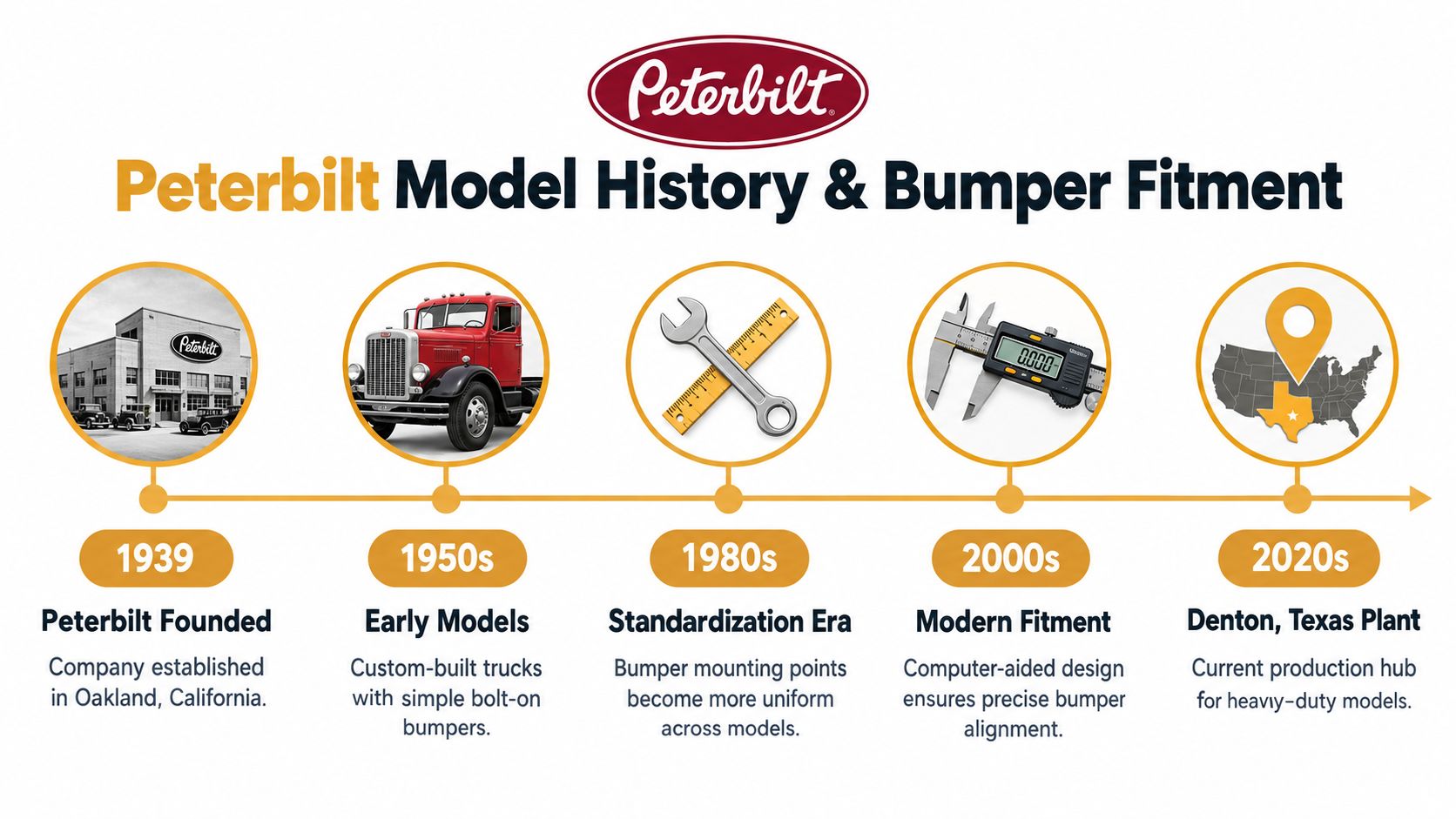
Model changes matter just as much as manufacturing milestones. The Model 351 began production in 1954, and the Model 389 replaced the Model 379 in 2006. Peterbilt says the 389 eventually exceeded 100,000 units produced. Each generation can bring changes to hood shape, grille size, headlamp layout, tow-hook access, and bumper mounting locations. A bumper made for a 379 shouldn't be assumed to fit a 389 just because the trucks share a classic Peterbilt profile.
Identify the generation, not just the badge
Start with the exact model and year, then confirm the hood and front-end setup. Fleet teams should record bumper style and mounting details with each truck's maintenance information, especially when the fleet includes several Peterbilt generations. That makes it easier to source a replacement without relying on appearance or a broad model description.
For example, the Chrome bumper for Peterbilt 378 / 379 is listed for those models with standard or blind mount options. That model-specific fitment is a more useful starting point than a generic “Peterbilt bumper” label, but the truck's actual mounting condition and configuration still need checking before purchase.
Key Fitment Checks Before You Order
A model-year match is only the beginning. Peterbilt's Heavy-Duty Body Builder Manual gives bumper-to-frame distance, or BFF, as 11.4 inches for one configuration with an 11-5/8-inch rail, and 13.8 inches for another. The manual notes that dimensions are measured to the front of a 0.25-inch-thick bumper. Check the applicable drawing for your truck rather than treating either figure as a universal target. Peterbilt's body-builder manual is the reference for the relevant configuration.
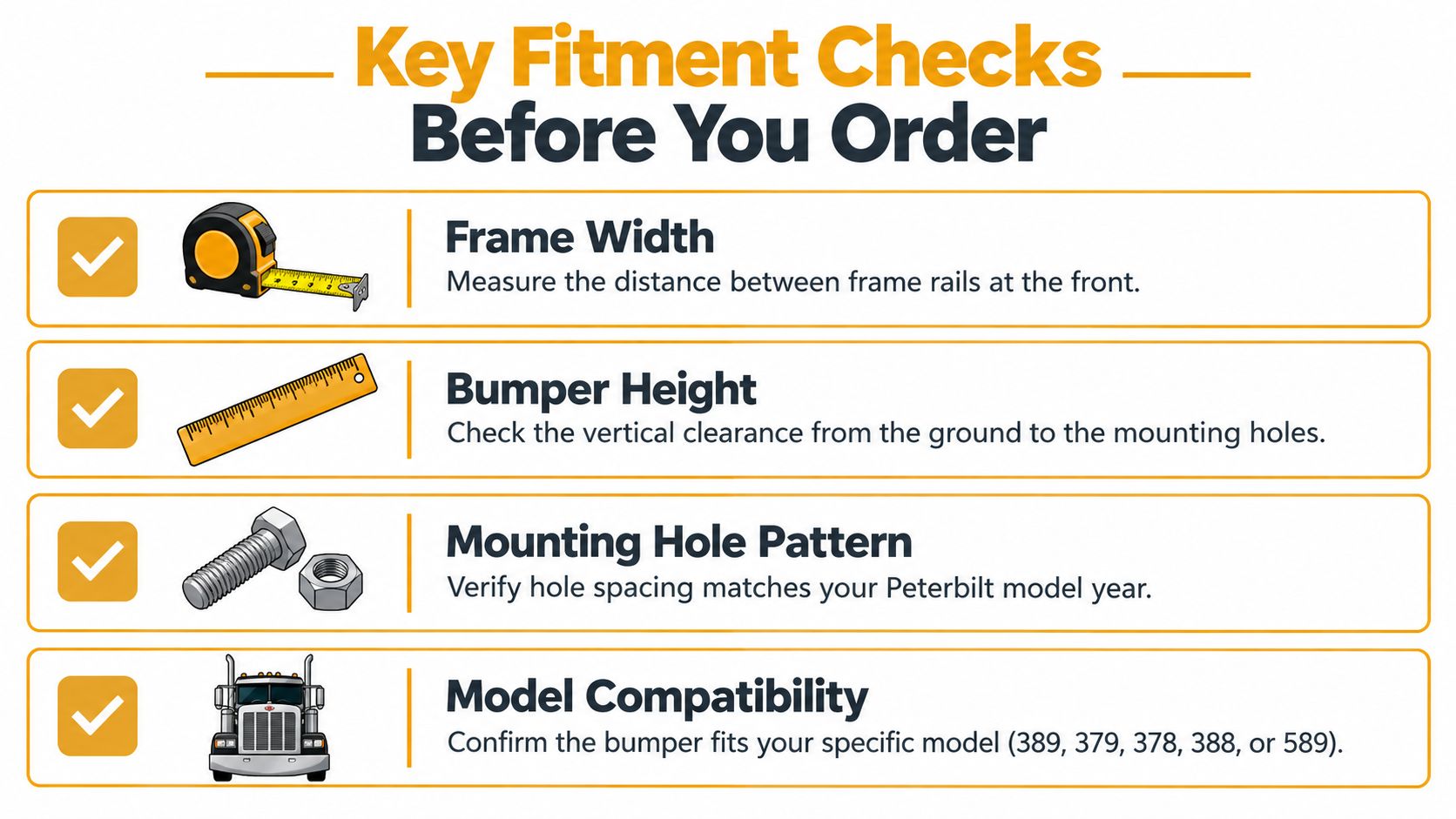
Use this pre-order checklist
- Record the truck details. Write down the VIN, model year, cab and hood style, axle position, and original bumper part number. Take photos straight on and from both front corners.
- Measure the mounting setup. Check frame-rail width, BFF, bumper depth, hole spacing, and the intended bracket arrangement. Compare your measurements with the body-builder drawing for the truck's configuration.
- Check openings and clearances. Confirm the grille and headlamp cutouts, license-plate provision, tow-hook access, and room around lamps and other front-end equipment. A bumper can match the advertised model range and still have the wrong openings for your truck.
- Inspect behind the old bumper. Look at frame horns, mounting points, supports, grille surrounds, fenders, lighting, and wiring. Collision damage or previous modifications can leave the truck unable to accept a direct replacement without repair.
A bumper that matches the catalog description can still be wrong for a truck with bent mounts or altered brackets. Measure the truck you have, not the truck the listing assumes.
If the frame horns or mounting points are distorted, pause before ordering. The job may require structural repair and alignment work, not just a replacement bumper.
Chrome vs Stainless Steel Bumper Materials
Choose material for the route and care routine, not just the shine. A truck that works in dry conditions has different corrosion demands from one that regularly sees road salt, coastal air, or wet grime trapped around brackets. The finish can look polished while corrosion starts at seams, fasteners, welds, or cutout edges.
Type 430 stainless steel is a 17% chromium ferritic stainless steel used in decorative automotive trim, with useful resistance to atmospheric exposure and fresh water. Guidance from the British Stainless Steel Association on salt-spray testing notes that Type 304 may not perform satisfactorily in a 3% salt-spray environment, though it can remain satisfactory for up to 120 hours when the concentration is reduced to 0.3%. Those test conditions aren't a promise of service life on a truck. They do show why chloride exposure and maintenance matter.
| Material | Best For | Corrosion Resistance | Typical Use |
|---|---|---|---|
| Chrome-plated carbon steel | Buyers who value a bright finish and are prepared to maintain it | Depends on keeping the plating intact; damage can expose the base steel | Highway and regional use where chips and surface damage are inspected |
| 430 stainless steel | General hauling and milder exposure | Useful resistance in everyday atmospheric conditions and fresh water | A polished working-truck finish for inland routes |
| 304 stainless steel | Routes with greater chloride exposure and owners focused on finish retention | Better suited to carefully specified corrosion-resistant construction, but not immune to chloride attack | Coastal or winter service where washing and inspection are part of maintenance |
Chrome plating doesn't remove the need to wash off salt and road film. Rinse the lower edge and the area around the fasteners, and don't leave wet debris trapped behind brackets. For a closer look at the construction trade-offs, see this comparison of chrome-plated steel and chrome-plated stainless steel.
The right choice depends on ownership and upkeep. A dry-region truck that's washed and inspected may not need the highest chloride resistance available. A northern or coastal truck that runs through winter residue may justify a more corrosion-resistant option, especially if keeping the finish presentable matters for the long haul. Inspect the attachment areas as closely as the mirror-polished face.
Popular Peterbilt Bumper Styles and Finishes
The right style has to fit both the truck's front end and its job. Peterbilt offers the Model 389 with aluminum, chrome, painted steel, standard taper, deep taper, Texas Square, and heavy-duty logger-style bumper configurations. Its listed front axle ratings range from 12,000 to 22,800 pounds, so axle rating alone won't identify the right bumper. Check the exact truck setup against Peterbilt's Model 389 specifications.
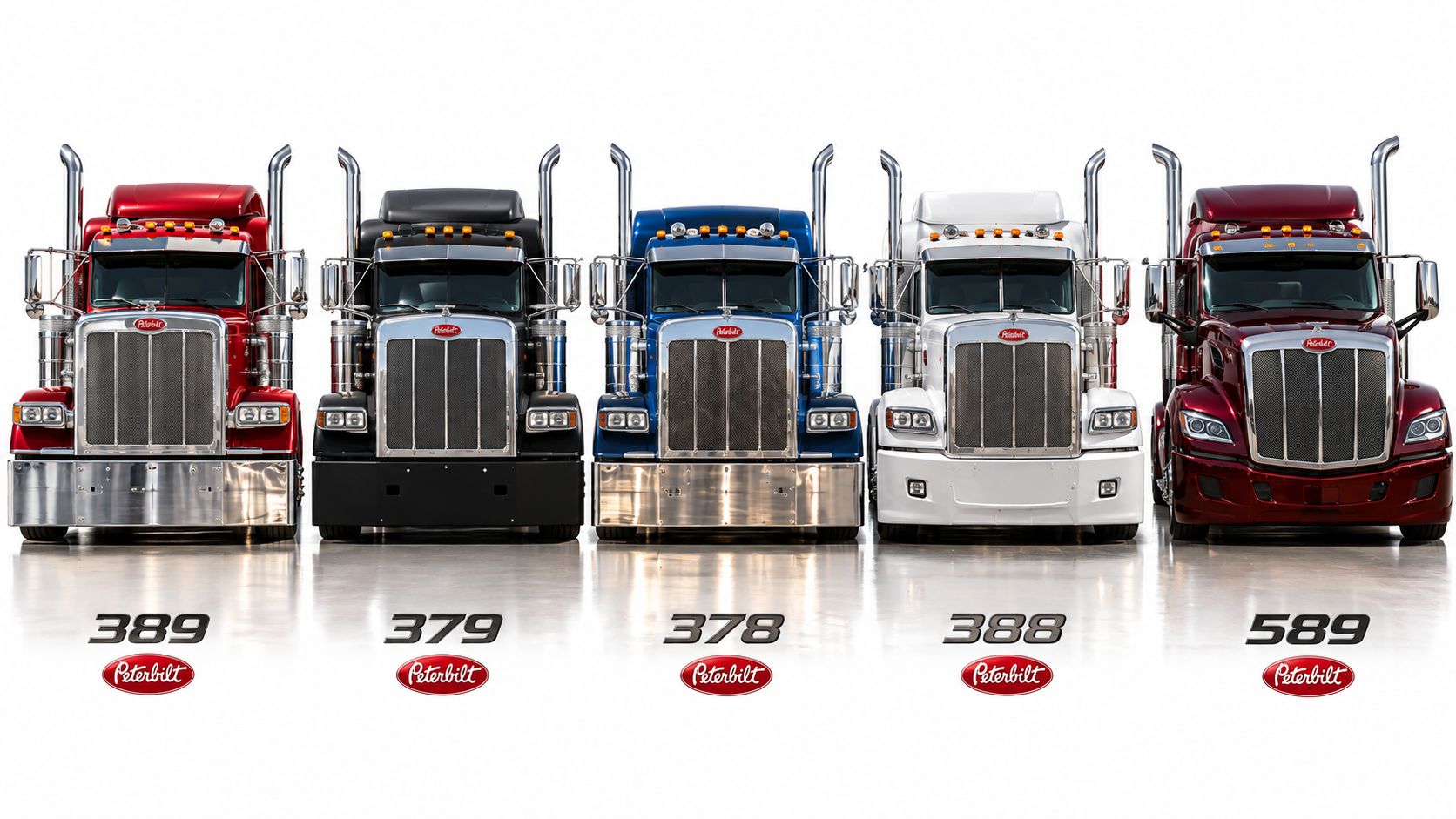
For highway and show trucks, chrome or polished stainless can deliver the bright appearance many drivers want. A deep taper or Texas Square design changes the look, but the bumper still has to match the frame, hood, axle position, tow-point layout, and required cutouts. On a truck that regularly sees rough yards or impact exposure, a heavy-duty logger-style design may suit the work better than a show-focused profile.
Match the finish to how you use the truck
Some aftermarket bumpers combine a 10-gauge chrome-plated steel body with a mirror-polished finish, while premium options may be made from 3 mm chrome-plated stainless steel 304 or 430. A triple-layer hexavalent chrome process with 35 microns of nickel is specified for certain finishes. That describes the finish construction, not the bumper's full fitment or impact performance.
The Chrome bumper for Peterbilt 388 / 389 / 589 is listed with standard and blind mount options and configuration-dependent cutouts. Confirm the mounting pattern and openings for your actual truck before you order. For comparison, a Kenworth W900 chrome bumper or an 18-inch drop bumper is a different fitment decision, even if the finish and style look similar in a listing.
The video below offers a visual reference for comparing Peterbilt front-end styles.
Installation Guidance and Common Pitfalls
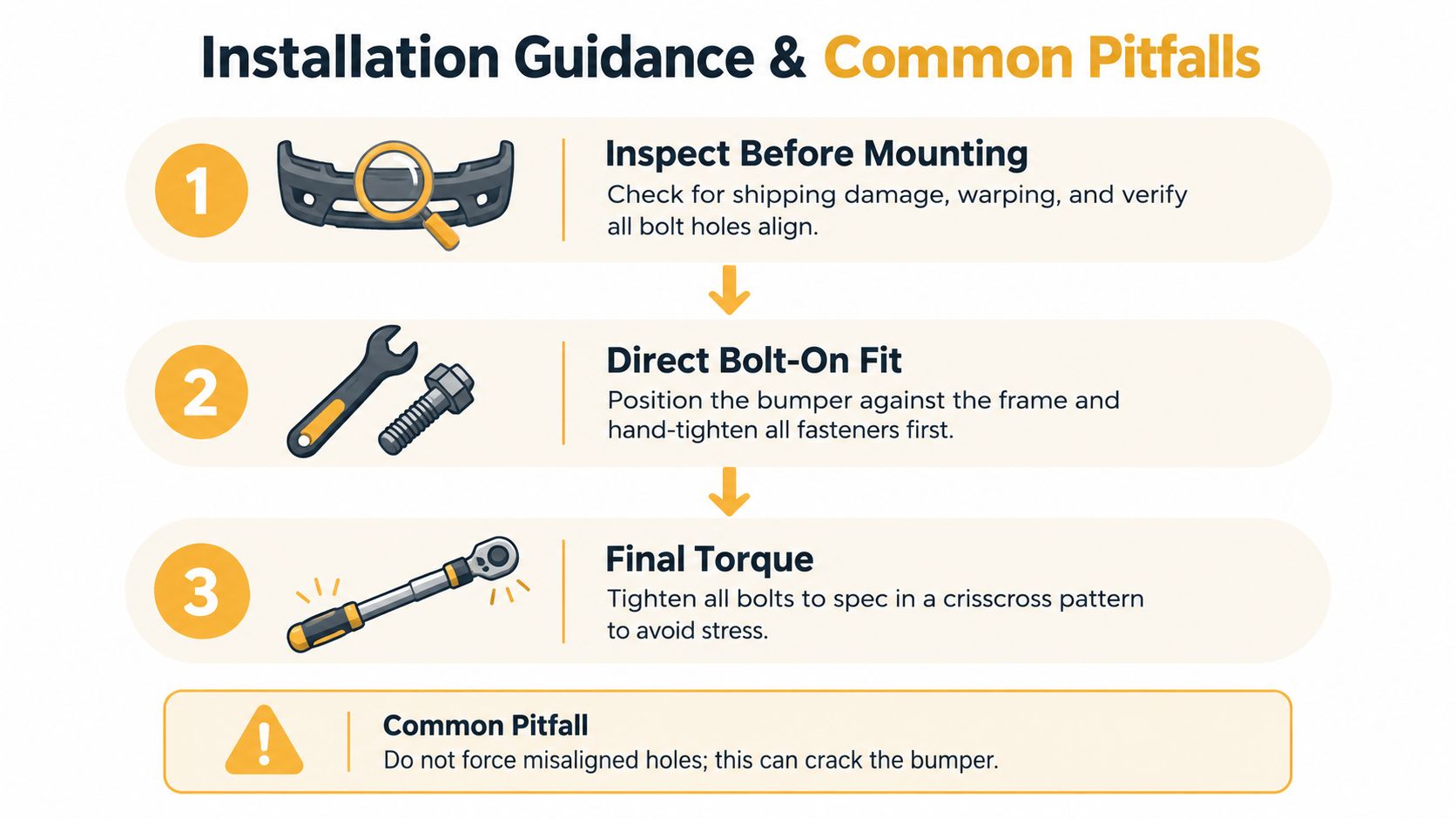
A direct-bolt bumper should meet the truck's mounting points without drilling, cutting, or forcing misaligned holes. Before installation, compare the new bumper with the old one and check that the brackets, holes, and cutouts match. A forced fit can damage the finish or create stress at the mounts.
Inspect first, then dry-fit
Record the VIN, cab and hood style, measurements, photos, and original part number. Before quoting or installing a replacement, inspect the frame horns, mounts, supports, grille surrounds, fenders, lights, and wiring. This matches the independent Peterbilt bumper fitment checks that can help catch collision damage and previous modifications.
Set-forward and set-back axle arrangements affect how the bumper sits relative to the front wheels and hood. Check the truck's actual axle position and bumper depth rather than assuming a shared model name means the same clearance. If you see bent frame horns, distorted mounting points, or damaged lamp wiring, stop and assess the repair before hanging a new bumper.
For a Peterbilt-specific installation overview, use this guide to installing a bumper on a Peterbilt truck. Keep the bumper supported during fitting, start fasteners by hand, and verify alignment and lamp visibility before fully securing it. Use the fastener torque specification for the truck and hardware. Don't guess at a torque value or pull a misaligned bumper into place with the bolts.
What Bumper Rules Actually Apply to Heavy Trucks
A common buying mistake is treating passenger-car bumper rules as a Class 8 truck requirement. 49 CFR Part 581 applies to passenger motor vehicles, not heavy trucks, and NHTSA says there's no federal bumper standard applicable to trucks. The agency also notes that aftermarket bumper installation can affect compliance with FMVSS No. 108 if the bumper obscures required lamps or equipment. Check NHTSA's interpretation of truck bumper requirements before relying on claims that a passenger-car bumper-impact test applies to a Peterbilt.
A tractor's front bumper and a trailer's rear impact guard are different components with different rules. Don't select a Peterbilt front bumper based on a trailer rear-guard requirement. For a practical overview of the distinction and related equipment questions, consult this guide to semi-truck bumper regulations.
What to verify after installation
Make sure the bumper is securely mounted and clears the hood, grille, tow points, and other equipment. Confirm that headlights, marker lamps, turn signals, and reflective devices remain visible. State equipment laws, carrier policies, and inspection requirements can still apply, so check the rules relevant to where the truck operates.
Getting the Right Peterbilt Front Bumper the First Time
A smart purchase starts with the truck, not the finish. Confirm the exact model and year, measure the frame-to-bumper relationship, check the mounting pattern and cutouts, and inspect for collision damage or prior modifications. Then choose the bumper style and material for the truck's routes, climate, and workload.
That process helps avoid return freight, shop delays, and makeshift bracket work. It also protects the front-end components around the bumper and helps keep the truck earning. A polished bumper is a good investment only when it fits correctly and suits the conditions it will face.
Before you order, make sure the product information clearly states the compatible models, material, finish, thickness, mounting options, and included cutouts. Ask the seller to confirm fitment against your VIN and configuration if any details are uncertain. Don't approve a bumper based on a model-year range alone when the truck's frame or mounts have been repaired.
Order the right bumper today, with fast shipping across the United States available for products that are in stock, and upgrade your truck with confidence. A careful fitment check now is simpler than losing time to a bumper that doesn't line up.
Galhor Inc. offers configurable bumpers for Peterbilt, Kenworth, Freightliner, and Volvo Class 8 trucks, with material and finish options selected for the truck's fit and use. Share your truck's model, year, and configuration, then visit Galhor Inc. to find a bumper that matches your rig.